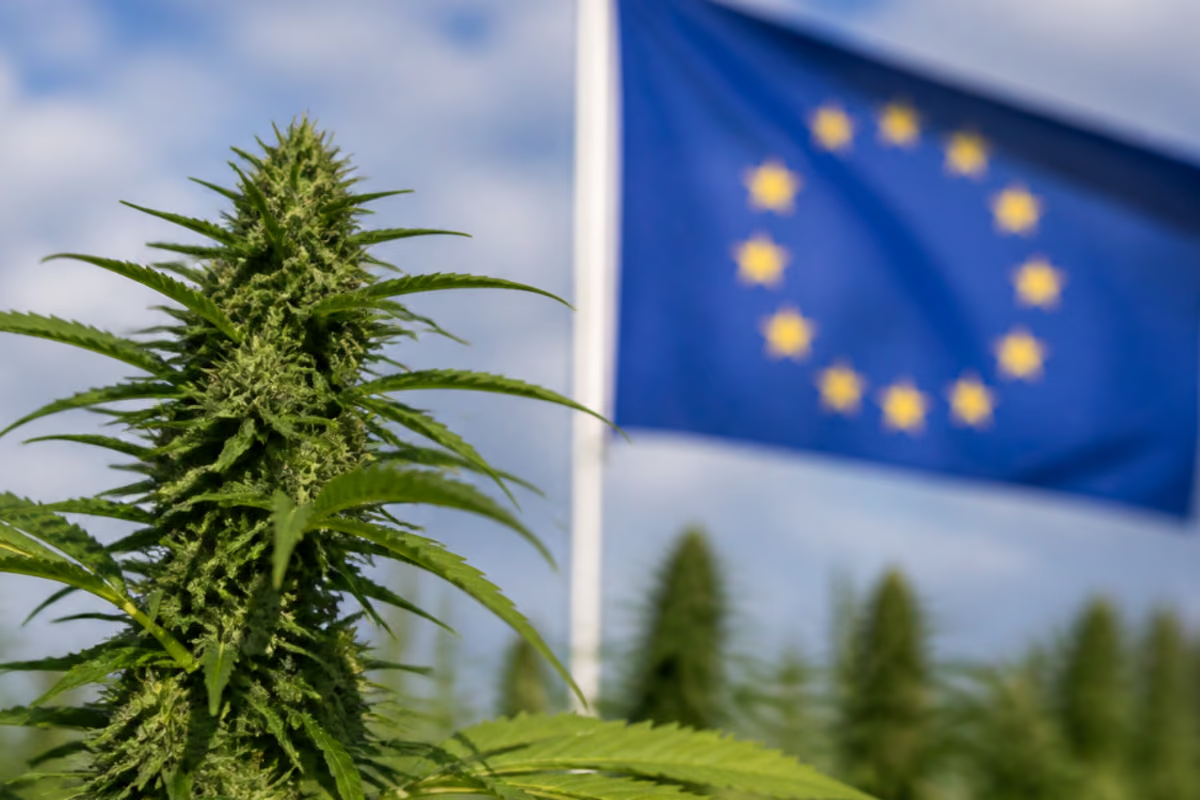
Cannabis remains Europe’s most widely consumed illicit drug. An estimated 25 million adults reported using it in the past year, according to the European Union Drugs Agency’s European Drug Report 2026. The market is also changing, with a wider range of products, stronger resin, shifting supply routes and different national approaches to regulation. These changes make cannabis-related harms harder to assess and increase the need for reliable monitoring.
Europe’s cannabis market is changing unevenly
The EUDA estimates that 8.7% of adults aged 15 to 64 used cannabis in the last year. That figure describes a large consumer population, but it does not show a uniform European trend. Among countries with surveys conducted since 2023, three reported increased use, ten reported stable use and two recorded decreases compared with their previous comparable survey.
The report draws on evidence from different periods. Much of the treatment and seizure data concerns 2024, wastewater findings cover 2025, and policy developments extend into 2026. These figures need to be read with their dates and methods in mind, rather than as a single snapshot.
At Shottas®Seeds, we distinguish between these measures when discussing the report. Changes in laws or seizure totals alone do not establish whether cannabis use is becoming more prevalent or more harmful.
Who uses cannabis, and how frequently?
Cannabis use is more common among younger adults. An estimated 15.3% of people aged 15 to 34, or 15.4 million people, used it during the previous year. Males were typically twice as likely as females to report use.
Among 15- to 24-year-olds, annual prevalence reached 18%, representing 8.6 million people. Around 9.6%, or 4.6 million, reported use during the previous month.
The report also measures how often people use cannabis. Approximately 1.6% of adults aged 15 to 64, or 4.5 million people, used it daily or almost daily. Among young adults aged 15 to 34, the corresponding estimate was 2.3%, or 2.3 million people. The report defines daily or almost daily use as use on at least 20 days in the previous month.
In the 2024 ESPAD school survey, cannabis was the most commonly used illicit drug in every participating EU Member State. On average, 13% of surveyed students aged 15 to 16 reported lifetime use. This means they had used cannabis at some point; it does not necessarily indicate current or frequent consumption.
Wastewater results varied too. Of 63 cities across 17 EU Member States, Norway and Türkiye with comparable measurements, 21 reported increased levels of the cannabis metabolite THC-COOH in 2025, while 28 recorded decreases. These measurements supplement surveys, but they cannot directly count individual consumers or establish how often they use cannabis.
A wider range of products and risks
Herbal cannabis and cannabis resin remain Europe’s most widely available and consumed cannabis products. Consumers also encounter high-potency extracts, edibles, low-THC products, CBD-containing goods and newer psychoactive cannabinoids.
These products differ in ways that matter for health. Their composition, THC concentration, contaminants and patterns of consumption all affect risk. Products sold under the same cannabis label may have different contents.
Extracts, edibles and adulterated cannabis
High-potency extracts and edibles have been linked to acute drug-toxicity cases in emergency departments and enquiries to poison centres. Health services therefore need to recognise and manage exposure to a broader range of cannabis products.
Some products sold as cannabis on the illicit market may also be adulterated with potent synthetic cannabinoids. Consumers may not know what they have taken, which can complicate diagnosis and treatment.
Semi-synthetic cannabinoids and CBD
Semi-synthetic cannabinoids, including hexahydrocannabinol, or HHC, have appeared on commercial markets in parts of Europe. They are often manufactured from CBD extracted from low-THC hemp, linking hemp production to the manufacture of other psychoactive substances.
In 2026, the EUDA was asked to assess CBD’s role as a precursor in producing THC or other psychoactive cannabinoids. The assessment concerns CBD’s potential use in manufacturing; it does not equate CBD itself with the finished substances. Authorities dismantled at least three illicit sites producing THC or semi-synthetic cannabinoids in 2024: two in the Netherlands and one in Poland.
THC potency is rising, especially in resin
In 2024, the average THC content of cannabis resin seized in the European Union was 24.6%, roughly twice the 12% average recorded for herbal cannabis. Indexed trends show resin potency increasing by 66% between 2014 and 2024, compared with a 19% rise for herbal cannabis.
These averages describe seized products, not every product sold or consumed. They show a change in the potency of the cannabis being intercepted, but cannot establish the contents of an individual product.
Higher potency does not necessarily mean better quality. A higher THC concentration can increase exposure for a given quantity consumed, but says nothing about pesticide contamination or other aspects of product safety. Clear information about composition is more useful than a claim about strength alone.
Health harms and treatment demand
People who use cannabis daily or almost daily are the group most likely to experience cannabis-related problems. The EUDA links cannabis use with chronic respiratory symptoms, dependence and psychotic symptoms, as well as poorer educational achievement and a greater risk of involvement with the criminal justice system.
Early initiation, high-potency products and regular, long-term consumption are the factors most closely associated with problems. Outcomes differ between consumers, but these associations help identify where prevention, assessment and support are most needed.
In 2024, cannabis accounted for 33% of reported specialist drug treatment demands across the European Union, Norway and Türkiye. Approximately 104,000 clients entered treatment for cannabis-related problems, including about 62,000 first-time entrants. Cannabis was the main problem drug for 41% of all first-time treatment clients, the largest share.
On average, approximately 11 years separated first use from treatment entry. This suggests a long period of potential exposure before specialist support, though it does not establish when problematic use began.
Treatment figures also depend on how services and referral systems operate. Available responses include psychosocial treatment, brief interventions, specialised cannabis programmes and targeted online support. Some clients are referred through the criminal justice system. Services often need to address tobacco cessation alongside cannabis use.
Treatment admissions are therefore not a direct measure of dependence across the population. To assess treatment outcomes, researchers need information about clients’ needs, how they were referred and the interventions they received.
What emergency departments are reporting
Cannabis appears frequently in national hospital records of drug-related emergencies. In Spain, it was involved in more than 46% of reported cases in 2023, approximately 3,700 out of 8,000. France reported involvement in 28% of cases, representing more than 6,300 presentations.
Within the Euro-DEN Plus sentinel hospital network, cannabis was the second most frequently reported substance after cocaine in 2024. Across participating hospitals, the median proportion of presentations involving cannabis was 20%. The median patient age was 28, and 74% were male.
Cannabis was usually reported alongside other substances. Its involvement does not demonstrate that it alone caused the emergency. The sentinel hospital findings also do not represent every European hospital: they help identify health problems, but are not a complete population-wide measure.
Trafficking routes shift as resin seizures fall
Europe’s illicit cannabis market is valued at more than EUR 12 billion. It generates substantial income for organised crime groups involved in cultivation, trafficking and distribution. Some Member States report high levels of violence associated with this profitable and varied market.
EU authorities reported 252,000 cannabis resin seizures in 2024, totalling 321 tonnes, compared with 551 tonnes in 2023. That 42% decline brought the quantity to a record low in the reported series. Spain still recorded Europe’s largest resin total, at 206 tonnes, despite a 45% reduction.
The EUDA identifies targeted enforcement and changing trafficking patterns as likely influences. A lower seizure total does not, by itself, prove that supply or demand fell proportionately.
Herbal cannabis seizures were steadier: 219,000 seizures yielded 199 tonnes, compared with 201 tonnes in 2023. National results differed sharply, however. Quantities fell 18% in Spain but rose 1,075% in Belgium and 278% in the Netherlands, where authorities intercepted large consignments from North America and other non-European regions.
Türkiye separately reported approximately 14 tonnes of resin across 17,400 seizures and 47.7 tonnes of herbal cannabis across 80,000 seizures.
Trafficking networks are using a wider range of routes and methods. Spanish authorities have seized drones and speedboats used in cannabis trafficking. Shipments have also reached Europe from Canada, the United States and, to a lesser extent, Thailand.
In November 2025, the EUDA issued its first European Drug Alert System alert, warning about North American cannabis entering European markets. Concerns included higher-potency products and contamination with potentially hazardous pesticides. A product’s geographic origin does not establish its safety.
European production and recorded offences
Europe also has its own illicit cannabis production. Cultivation within the European Union serves both domestic and international markets, often from sites near consumers. Authorities dismantle thousands of sites annually, ranging from small operations to industrial-scale facilities.
Spain accounted for 75% of the cannabis plants seized in the European Union in 2024. That figure records enforcement findings, not Spain’s precise share of total European production.
Reported cannabis use or personal-possession offences declined from approximately 615,000 in 2023 to 477,000 in 2024. Supply offences fell from 100,000 to 74,000. Legislation, policing and reporting practices can all affect these totals, so the figures alone cannot establish changes in cannabis use or supply.
Cannabis regulation differs by country
There is no single European model for regulating adult recreational cannabis. National reforms differ in what they permit, how people can obtain cannabis and how the rules are implemented. They generally include provisions for prevention, monitoring and evaluation.
- Malta: Legislation adopted in December 2021 permitted limited home cultivation, possession of small quantities and private use. Regulated growing associations can sell to members on a non-profit basis.
- Luxembourg: Legislation adopted in July 2023 permitted limited home cultivation and private use.
- Germany: Legislation adopted in February 2024 allowed limited home cultivation, possession and use of small quantities, alongside non-profit access through regulated growing associations.
- The Netherlands: A closed cannabis supply-chain experiment began in ten municipalities in 2025, involving sales through coffeeshops of cannabis produced at regulated premises.
- Czechia: In January 2026, legislation permitted individuals to cultivate up to three plants for private consumption.
These measures do not amount to unrestricted commercial legalisation. Their practical implications depend on current national rules; permission in one country does not extend to another.
Germany and Luxembourg had published interim evaluations by the end of 2025. Home cultivation in Germany, Luxembourg and Malta is not systematically monitored, however, so uptake remains uncertain. Further evaluation is needed before firm conclusions can be drawn about effects on consumption, illicit supply or public health.
Frequently asked questions
Is cannabis use increasing across Europe?
Not consistently. Recent national surveys and wastewater measurements show increases in some locations and stability or decreases in others. They do not support a single Europe-wide trend.
How common is frequent cannabis use?
Approximately 4.5 million adults aged 15 to 64 use cannabis daily or almost daily. The report defines this as consumption on at least 20 days in the previous month, a pattern associated with a greater risk of problems.
Is cannabis resin stronger than herbal cannabis?
On average, resin seized in the EU in 2024 had about twice the THC concentration of seized herbal cannabis. Individual products vary, so these averages cannot determine the contents of a specific sample.
Does cannabis cause all the emergencies in which it appears?
No. Hospital records frequently identify cannabis alongside other substances. Its presence alone does not establish what caused an emergency; the clinical circumstances and the other substances consumed also matter.
Does falling seizure volume mean less cannabis is available?
Not necessarily. Seizure quantities depend on enforcement activity, shipment sizes and trafficking routes, as well as supply. They need to be considered alongside other market indicators.
Is home cultivation now legal throughout the EU?
No. Several countries permit limited cultivation under national conditions, but those reforms do not create EU-wide permission. Anyone considering home cultivation needs to check current local legislation.
Does the report establish that regulation improves public health?
Not yet. The models differ, some are recent, and gaps in monitoring remain. Evaluations need to measure outcomes before conclusions can be drawn about benefits or harms.
What does the supplied evidence say about cannabis prices?
The report’s data catalogue includes price and potency tables, but the supplied material contains no specific retail price figures. It therefore provides no basis for stating a European average price or price trend.




 Europe