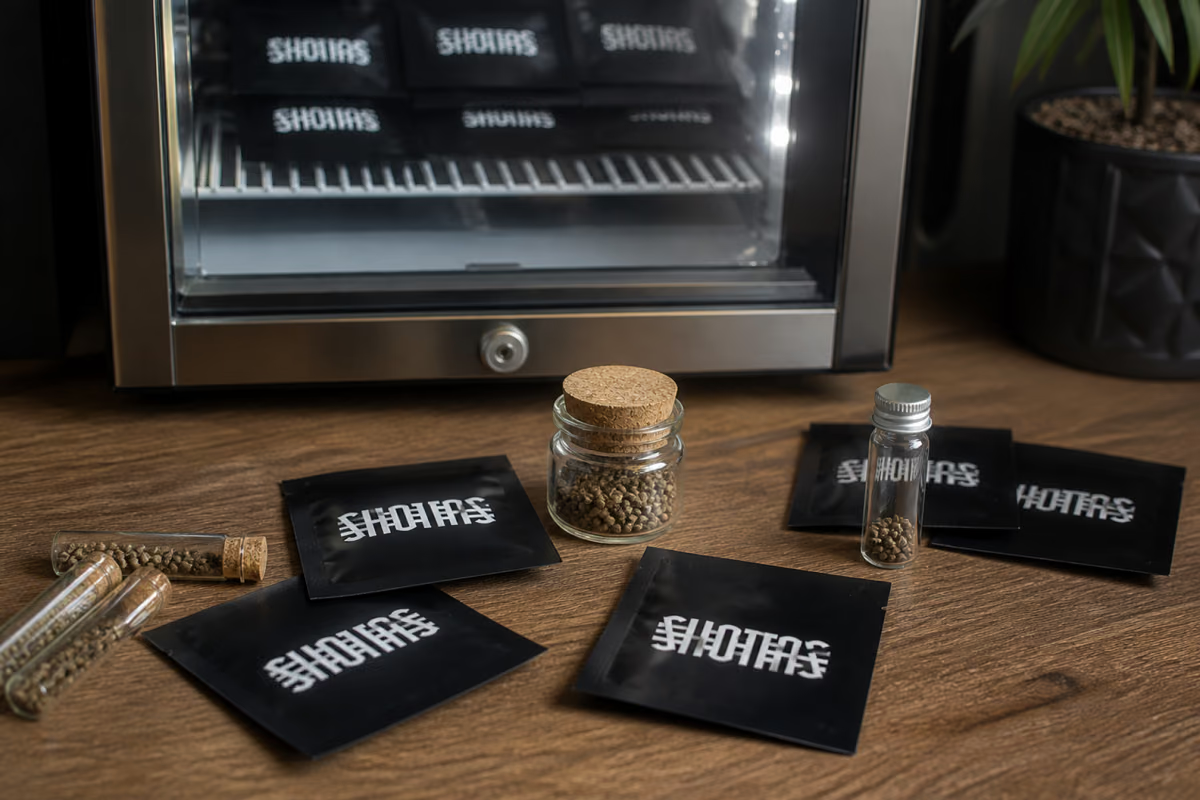
To store cannabis seeds properly, keep them somewhere cool, dark, dry and airtight. A stable drawer or cupboard is fine for short periods. For long-term storage, seal the seeds with a desiccant and put them in the fridge. Under these conditions, quality seeds can keep a high germination rate for up to five years.
Every seed you store carries the genetics you chose, whether that's a proprietary cross, a reimagined classic, or the free seeds that came with your last order. The shell may look tough, but humidity, temperature swings, light and oxygen slowly drain the seed's reserves, and a few careless months can turn a promising pack into duds. Good storage costs little and takes a few minutes. We're growers too, and we hate seeing good genetics go to waste.
Why cannabis seeds need careful storage
It's easy to forget that cannabis seeds are living organisms. Inside the shell sits an embryo, the tiny undeveloped plant that grows into a seedling. Around it is a reserve of stored nutrients that fuels germination, the process in which the seed absorbs water, breaks dormancy and pushes out its first root.
Before germination, a seed is in dormancy, a resting state in which metabolic activity slows almost to a standstill, a bit like an animal in hibernation. Slowed down is not the same as stopped, though. The seed still respires and uses a small amount of its stored energy every day, and like any living thing, it can die.
How fast a seed ages depends almost entirely on its surroundings. Growers talk about this in terms of viability: the seed's ability to germinate and grow into a healthy plant.
- Under ideal conditions, metabolism barely ticks over and nutrient reserves last for years.
- Under poor conditions, the seed burns through its reserves early, or attracts fungi and pests that destroy it outright.
A seed can look perfect and still be dead inside. Once the reserves are gone, no amount of soaking or scratching will bring it back, which is why storage should be treated as the first step of a grow rather than something to sort out later.
The four enemies of cannabis seeds
Four environmental factors do the real damage to stored cannabis seeds. If you control them, your seeds stay viable. If you ignore them, viability drops faster than most growers expect.
- Humidity: Moisture in the air is the biggest threat. Seeds absorb it, which can wake them from dormancy and invite mould and fungi.
- Temperature: Warmth speeds up metabolism. Rapid swings between warm and cool stress the seed and trick it into spending nutrients it should be saving.
- Light: In nature, light signals that growing conditions have arrived. Exposure can prompt a seed to start using up its reserves too early.
- Oxygen: Oxygen fuels respiration and oxidation, the chemical process that gradually breaks down the fats and proteins stored inside the seed.
These factors rarely act alone. A warm, humid room is far worse than either warmth or humidity on its own, because heat accelerates everything moisture sets in motion.
Seed scientists often cite a rule of thumb known as Harrington's rule, a pair of guidelines from seed-storage research:
- For every 1% drop in seed moisture content, seed lifespan roughly doubles.
- For every 5°C drop in storage temperature, seed lifespan roughly doubles again.
These are approximations, not laws, and they only hold within practical ranges. Still, they show that small improvements in dryness and coolness add up to big gains in longevity. Keeping seeds dark, dry, cool and sealed covers almost everything, and there isn't a shortcut around any of the four.
How humidity levels affect your seeds
Humidity deserves special attention because it does the most damage in the least time. Relative humidity (RH) is the amount of water vapour in the air, expressed as a percentage of the maximum the air can hold at that temperature.
Seeds are hygroscopic: they absorb or release moisture until they balance with the surrounding air. A seed stored in damp air becomes a damp seed. The table below gives general guidance on how different RH levels affect stored seeds over time.
| Relative humidity | What happens to the seed | Storage verdict |
|---|---|---|
| Above 70% | Seeds absorb significant moisture. Metabolism may restart, mould and fungi thrive, and premature germination is possible. | Destructive within days to weeks |
| 50–70% | Fungal spores become active and respiration speeds up. Nutrient reserves drain quickly. | Poor; viability falls within months |
| 30–50% | Moderate moisture. Seeds age steadily but without immediate risk of mould. | Acceptable for short-term storage |
| 20–30% | Low moisture keeps metabolism slow and prevents fungal growth. | Ideal for long-term storage |
| Below 15% | Extreme drying can stress some seeds if pushed too far. This is rarely reached without industrial equipment. | Unnecessary for home growers |
For home storage, the practical answer is a sealed container with a small packet of desiccant. A desiccant is a moisture-absorbing material, such as silica gel, that pulls water vapour out of an enclosed space. Some silica gel packets change colour when they're saturated, so you can see at a glance when to swap or dry them.
Short-term storage: weeks to a few months
If you plan to germinate your seeds within the next few weeks or months, you don't need an elaborate setup. What you want is a place that stays dark, dry and at a steady temperature.
- Keep seeds in their original packaging whenever possible. At Shottas®Seeds, we pack our seeds to protect them from the moment they leave us until the moment they hit your germination medium.
- Choose a dark cupboard or drawer in an interior room, away from windows, radiators, ovens and appliances that give off heat.
- Avoid spots that follow outdoor temperatures. Sheds, garages, attics and basements often swing sharply between day and night, and those swings stress seeds.
- Stay away from moisture sources such as bathrooms, kitchens, laundry areas and grow rooms, where humidity spikes are routine.
Take a garage as an example. If you live somewhere with hot days and cold nights, a garage can go through a 15–20°C swing in a single day. Each swing nudges the seed's metabolism up and down, and each cycle costs it a little energy. Over a season, germination rates suffer, even though the seeds look untouched.
A bedroom wardrobe or closed desk drawer is usually a much better choice. These spaces hold a steady temperature, stay dark and rarely get steam or water, which is all short-term storage needs.
Long-term storage: the fridge method
For seeds you want to keep for a year or more, use the refrigerator. A household fridge typically runs at around 4–8°C, which slows seed metabolism dramatically. Add low humidity and darkness, and you have close to ideal conditions for preserving genetics.
To set up long-term storage properly:
- Leave unopened packs sealed. The original packaging is your first layer of protection.
- Move leftovers into an airtight container straight away. If you've opened a pack and have seeds remaining, don't leave them loose.
- Add a desiccant. Put a small silica gel packet in the container with the seeds to absorb residual moisture.
- Remove as much air as possible. Ziplock bags work well because you can press the air out to make an almost vacuum-sealed pouch. Less air means less oxygen and less moisture.
- Block the light. Put the sealed bag inside a dark plastic bag or an opaque container, so the fridge light doesn't reach the seeds every time the door opens.
- Label everything. Note the strain name, type (feminized or autoflowering) and storage date, so you know to germinate the oldest stock first.
- Place the container at the back of the fridge, where the temperature stays most stable, and keep it away from the door.
One habit matters a lot here: when you take the container out, let it reach room temperature before you open it. Opening a cold container in warm air causes condensation, so moisture forms directly on your seeds, which undoes the work of keeping it out.
Choosing the right fridge for seed storage
Some fridges are better for storing cannabis seeds than others. Two things make the difference: how often the door opens, and how much humidity builds up inside.
Door traffic and temperature swings
Every time you open a fridge door, warm room air rushes in and the internal temperature jumps. In a busy kitchen fridge, that can happen dozens of times a day. Seeds at the back feel it less than those in the door, but they still feel it.
If you have a second fridge that gets opened less often, such as a drinks fridge in a spare room, keep your seeds in that one. Fewer openings mean fewer temperature spikes.
Why No Frost fridges are better
Humidity harms seeds more than temperature, light or oxygen, so the type of fridge matters. A No Frost fridge, also called a frost-free fridge, automatically removes moisture from the air to prevent ice build-up. That leaves the inside drier than in a traditional fridge, where condensation and frost can collect on the walls.
A dry fridge, a sealed container and a desiccant give your seeds three layers of defence against moisture. If you have an older fridge that frosts up, the airtight container and silica gel matter even more. Check the desiccant regularly and replace it if it looks saturated.
Can you freeze cannabis seeds?
Yes, you can store cannabis seeds in the freezer. The lower the temperature, the more slowly seeds decline, which is why professional seed banks that preserve plant genetics for decades rely on sub-zero storage.
Most home growers don't need to freeze their seeds, though. In a well-sealed, dry, dark fridge, quality cannabis seeds can stay viable for up to five years with a high germination rate. That covers the realistic timeline of almost any hobby grower's collection.
Freezing also carries risks that the fridge doesn't:
- Moisture turns to ice. Any water inside or around the seed can freeze, and ice crystals may damage cell structures. Seeds must be thoroughly dry before freezing.
- Freeze-thaw cycles cause harm. Taking seeds out of the freezer and putting them back again and again causes stress and condensation. Once frozen, seeds should stay frozen until you're ready to use them.
- Thawing brings condensation. A frozen container opened in warm air collects moisture instantly. Always let it reach room temperature, still sealed, before opening.
If you do freeze seeds, divide them into small portions first. That way you only thaw what you plan to germinate, and the rest stays at a constant temperature.
Comparing seed storage options
Each storage method suits a different timeline and a different amount of effort. The table below compares the main options so you can match your storage to your growing plans.
| Storage method | Typical temperature | Best for | Advantages | Drawbacks |
|---|---|---|---|---|
| Dark drawer or cupboard | Room temperature (approx. 15–22°C) | Weeks to a few months | No equipment needed; easy access | Vulnerable to seasonal temperature and humidity changes |
| Kitchen fridge | Approx. 4–8°C | Several months to a few years | Slows metabolism significantly; widely available | Frequent door openings cause temperature swings |
| Second or No Frost fridge | Approx. 4–8°C | Up to around five years | Stable, dry conditions; minimal disturbance | Requires a dedicated or low-traffic appliance |
| Freezer | Approx. −18°C | Very long-term preservation | Slowest possible ageing at home | Risk of ice damage and condensation; seeds must be very dry |
| Garage, shed or attic | Fluctuates with outdoor conditions | Not recommended | None for seed storage | Large temperature and humidity swings rapidly reduce viability |
Whichever method you pick, you still need an airtight container, a desiccant, darkness and a stable spot. The method only decides how cold you go.
Which seeds to plant first and which to store
Before you germinate anything, take a moment to inspect your seeds. A healthy cannabis seed has an intact, hard outer shell. The shell, also called the seed coat, is the protective layer that shields the delicate embryo and its nutrient reserves from the outside world.
Use the inspection to decide what gets planted now and what goes back into storage:
- Germinate damaged seeds first. Seeds with cracks, chips or dents in the shell are far more vulnerable. Moisture, oxygen and fungi can reach the embryo directly, so these seeds won't last in storage.
- Store the intact ones. Seeds with a smooth, unbroken shell are the ones worth keeping for later grows.
- Use the oldest stock first. If you've been labelling your containers, rotate your collection so no seeds sit longer than necessary.
At Shottas®Seeds, we check our seeds before we pack and ship them, because average is our enemy and we only want strong genetics in your garden. If you ever spot damage on seeds you've received from us, contact our customer service team right away and we'll make it right.
Reviving old seeds: pre-soaking techniques
Most of us have found a forgotten seed at the bottom of an old drawer. It might be years old and stored in who-knows-what conditions, so its chances aren't great, but they aren't zero either. A pre-soak can give old seeds the extra push they need to wake from dormancy.
Soak old seeds in water enriched with one of the following:
- Carbonated water: The dissolved carbon dioxide and slight acidity may help soften the shell and signal the seed to start germinating.
- Fulvic acid: A natural organic compound derived from humus that helps plants absorb nutrients and may support early root development.
- Germination booster: A commercial product formulated with nutrients, enzymes or hormones to encourage sprouting.
- Hydrogen peroxide: A mild oxidiser that adds oxygen to the water and helps sterilise the seed surface. Use only a heavily diluted solution: a few drops of 3% peroxide in a cup of water.
- Gibberellic acid: A plant hormone that naturally triggers germination and helps break dormancy. Use it at very low concentrations and follow the product label closely.
For best results, use room-temperature water and soak the seeds for around 12 hours in a dark place. Cold water can shock seeds, and they don't need light at this stage. After soaking, move the seeds to your usual germination method, such as damp paper towels or a starter plug.
Scarification and other mechanical tricks
Older seeds often develop an extra-tough outer shell that moisture and warmth struggle to get through. When a pre-soak alone isn't enough, a little mechanical help can make the difference. You'll need a steady hand, because the embryo inside is fragile.
Scarifying with sandpaper
Scarification means lightly scratching or abrading a seed's shell so water can enter more easily. Line a small container with fine-grit sandpaper, add the seeds, close the lid and shake gently for a few seconds. You can also rub each seed lightly between two sheets. Aim for a slightly dulled surface, not deep grooves, and scarify just before soaking for the best effect.
Removing the ridge
The ridge is the slightly raised seam that runs around one side of the seed. Over time it can get even harder than the rest of the shell. Carefully shaving a thin layer off the ridge with a sharp utility blade can help the seed split open during germination. Work slowly and remove as little as possible.
Making a small cut
As a last resort, you can make a tiny nick in the shell. It won't save every seed, and it's the riskiest method of the three: if the blade touches the embryo, the seed will never germinate. Hold the seed firmly, cut only the outermost layer, and stop as soon as you feel the resistance change.
Some old seeds won't sprout whatever you try.
How long do cannabis seeds stay viable?
The lifespan of a cannabis seed depends on two things: its quality at the start, and the conditions it's kept in afterwards. A mature, well-developed seed from a reputable breeder starts with full nutrient reserves, and storage decides how long those reserves last.
As a general guide:
- Poor storage (warm, humid, exposed to light): viability can fall noticeably within a year, and mould can ruin seeds in weeks.
- Room-temperature, dark, dry storage: seeds generally stay reliable for one to two years.
- Sealed, desiccated, dark fridge storage: quality seeds can keep a high germination rate for up to five years.
- Properly prepared freezer storage: potentially longer, though home collections rarely need it.
Viability usually declines gradually rather than all at once. A five-year-old batch that was stored well may still germinate strongly, while a two-year-old batch kept in a damp garage may struggle. Storage conditions tell you more than age does.
The simplest strategy is to buy what you plan to grow. If your seed stock matches your growing calendar, you get fresh genetics every season and fewer germination problems. Any extras, including the free seeds that come with every Shottas®Seeds order, deserve proper storage so they're ready when you are.
Frequently asked questions
What is the best way to store cannabis seeds long-term?
Seal them in an airtight container with a silica gel packet, wrap the container in something opaque, and keep it at the back of a fridge. A second or No Frost fridge is ideal because it stays drier and more stable. Always let the container warm to room temperature before opening it.
How long can cannabis seeds be stored?
In cool, dark, dry and airtight conditions, quality seeds can keep a high germination rate for up to five years. In a dark drawer at room temperature, they usually stay reliable for one to two years. Warm, humid or bright conditions shorten this dramatically.
Is humidity really worse than temperature for seeds?
Yes. Moisture can wake a seed from dormancy, speed up respiration and invite mould and fungi, all of which destroy viability faster than moderate warmth alone. That's why a desiccant and an airtight seal matter even inside a fridge.
Should I keep seeds in their original packaging?
Whenever possible, yes. Breeders design their packaging to protect seeds from light and handling. Once a pack is opened, transfer any leftovers to a sealed, air-free container with a desiccant.
Do I need to freeze my cannabis seeds?
Usually not. A well-managed fridge setup preserves seeds for as long as most home growers need. Freezing only makes sense for very long-term storage, and the seeds must be completely dry and stay frozen without repeated thawing.
Can I store seeds with cracked shells?
We don't recommend it. A cracked shell exposes the embryo to moisture, oxygen and fungi, so these seeds decline quickly. Germinate damaged seeds first and store only intact ones.
How can I get old cannabis seeds to germinate?
Start with a 12-hour soak in room-temperature water enriched with carbonated water, fulvic acid, diluted hydrogen peroxide, a germination booster or gibberellic acid. Keep the seeds in the dark while they soak. If the shell is very hard, lightly scarify it with fine sandpaper before soaking. Shaving the ridge or nicking the shell is a last resort, because it risks damaging the embryo.
Does storage affect feminized and autoflowering seeds differently?
No. Feminized and autoflowering seeds respond to humidity, temperature, light and oxygen in the same way, so the same storage rules apply. Labelling containers by type and date just helps you plan grows and rotate stock.





 Europe