
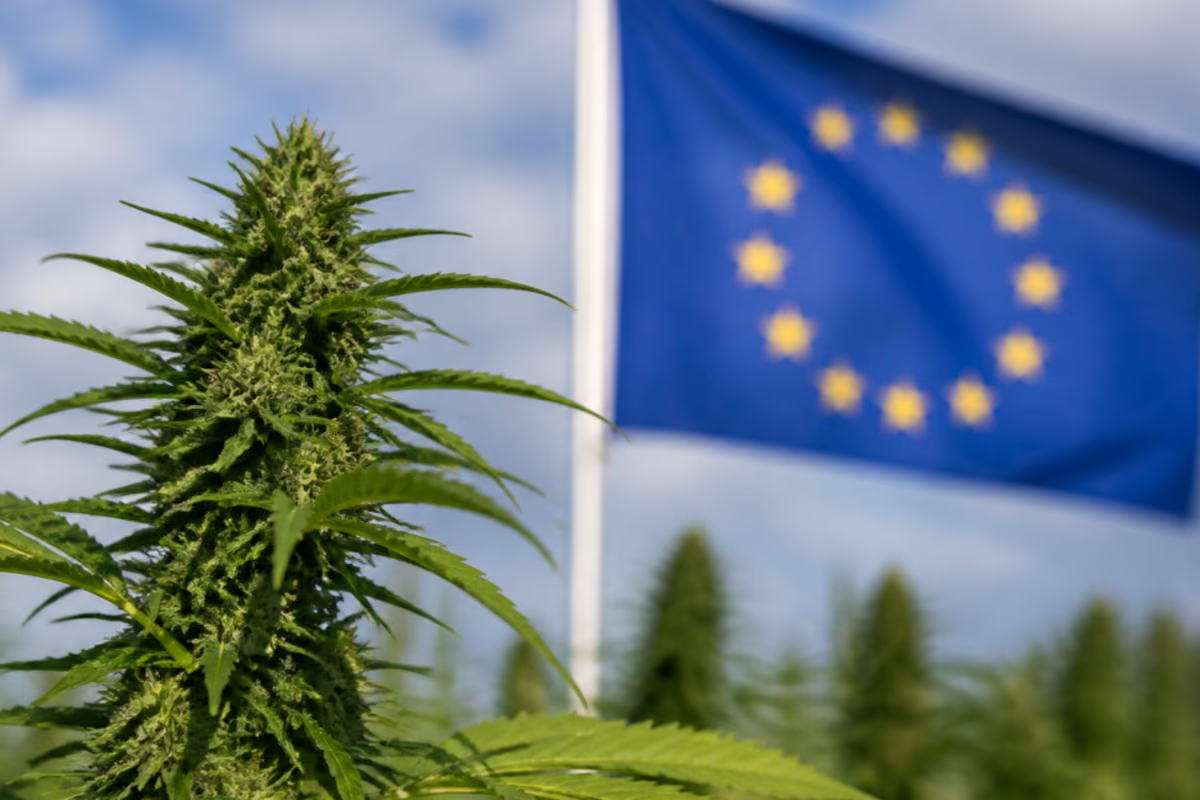
Europe's medical cannabis market was valued at USD 3,060.0 million in 2025 and is projected to reach USD 13,161.29 million by 2034, expanding at a compound annual growth rate of 17.60% between 2026 and 2034. The market multiplies more than fourfold in under a decade, and the reasons are concrete: regulatory reform, a rapidly widening patient base, and pharmaceutical capital moving into cannabinoid science. For anyone who works with this plant, in a lab, a licensed cultivation facility or a home grow tent, those numbers describe cannabis moving from the margins into ordinary European healthcare.
We follow this market closely because genetics sit at the root of all of it. Every gram of pharmaceutical-grade flower dispensed in a Berlin pharmacy started as a seed and a cultivar decision. Below, we break down what is driving the growth, where the money is concentrating, which countries are pulling ahead, and what still stands in the way.
The headline numbers, and what sits behind them
A 17.60% CAGR is aggressive for any healthcare category. Pharmaceutical markets in Europe typically grow in the low single digits. Medical cannabis is growing at more than five times that rate, and the reason is structural rather than cyclical. The market is not competing for share in a mature category. It is being created in real time as prohibition-era rules are dismantled country by country.
Three forces are compounding. Reclassification, simplified prescribing and telemedicine approval are removing the friction that kept patient numbers artificially low for years. Cannabinoid-based therapies are moving from anecdote to evidence, with approved medicines, published trials, and oncology and neurology specialists willing to prescribe. And Europe's ageing population carries a heavy burden of chronic pain, cancer, epilepsy, multiple sclerosis and neurodegenerative disease, exactly the indications where cannabinoids are gaining ground.
Add advances in extraction technology, wider pharmaceutical-grade product portfolios and rising R&D investment, and Europe is no longer a secondary market behind North America. It is becoming a leading hub for cannabis-based medicine in its own right.
Progressive regulatory reform
If you want to understand why the forecast curve bends upward so sharply, look at the statute books rather than the marketing decks. Governments across the continent are replacing improvised, restrictive arrangements with structured frameworks that define who can prescribe, who can dispense and what quality standards apply.
Germany: the Cannabis Act and a patient base that tripled
Germany remains the anchor of the European market, and the Cannabis Act of April 2024 is the most consequential piece of legislation the sector has seen. It reclassified cannabis out of the narcotics schedule, replaced restrictive narcotic prescription forms with standard medical prescriptions, and explicitly permitted telemedicine consultations for cannabis therapy.
The effect was immediate. Germany's medical cannabis patient base expanded from roughly 250,000 to nearly 900,000 within a single year. That kind of jump demonstrates something the industry has argued for a decade: demand was never the constraint. Administrative friction was.
Supply had to chase that demand. Germany's Federal Institute for Drugs and Medical Devices (BfArM) raised the national import quota to 192.5 tonnes in October 2025, well above the original 122-tonne ceiling, because actual prescribing volumes blew past projections. New domestic cultivation licences have been issued to enable large-scale German production alongside imports.
Commercially, the market is maturing into segments. In December 2025, Aurora Cannabis launched Daily Special™ in Germany, a brand built around consistent cannabis at accessible price points. The arrival of value-tier branding in a medical market is a signal in itself: when companies start competing on price per gram rather than novelty, the category has moved past early adoption.
Spain: from grey zone to hospital pharmacy
Spain introduced its first regulated framework for therapeutic cannabis, with dispensing controlled through hospital pharmacies under specialist supervision. Qualifying conditions include chronic pain, severe epilepsy, cancer-related symptoms and multiple sclerosis. The Spanish model is deliberately conservative, built on standardised preparations, specialist gatekeeping and hospital-level oversight, but formal recognition matters. It converts a legally ambiguous practice into a reimbursable, auditable clinical pathway.
The wider continental picture
Momentum is not confined to the two largest markets. Denmark converted its medical cannabis pilot programme into a permanent scheme, giving prescribers and suppliers the planning certainty that temporary pilots never provide. The Czech Republic has advanced both medical and adult-use regulation, which puts it among Central Europe's more progressive jurisdictions. Slovenia legalised medical cannabis, adding another national framework to the map. And Portugal has developed into a major European cultivation hub, exporting EU-GMP flower and extracts across the bloc.
Together, these moves do more than expand patient access. They de-risk investment. Capital does not flow into markets where the rules might reverse next year. It flows into markets with permanent frameworks, defined quality standards and predictable licensing.
Market segmentation: where the value sits
Aggregate growth figures are useful, but the segment data shows the market's character. Here is how the USD 3.06 billion of 2025 revenue breaks down.
By species: indica leads with 44%
Indica-dominant varieties hold 44% of the European market in 2025, for therapeutic rather than cultural reasons. Indica genetics are associated with sedative and analgesic effects that map onto the conditions driving European prescriptions: chronic pain, anxiety, insomnia and muscle spasticity. With an ageing population and a high prevalence of musculoskeletal and neurological disorders, demand skews heavily toward calming, body-focused cultivars.
There is a production logic too, and every grower recognises it. Indica-leaning plants generally finish faster, stay more compact and deliver reliable yields, which matters when a licensed facility has to hit contracted volumes on a fixed schedule. Shorter flowering cycles mean more harvests per year and more predictable supply for pharmacies that cannot afford stockouts.
In Germany, indica-dominant flower represents a substantial share of prescriptions dispensed through pharmacies, particularly for pain management and sleep-related indications. As clinical familiarity grows, prescribers increasingly specify chemovar profiles rather than simply "cannabis flower", a level of precision that would have been unthinkable five years ago.
By derivative: cannabidiol commands 51%
CBD holds 51% of the derivative segment in 2025. Its non-psychoactive profile is the decisive factor: it clears regulatory hurdles more easily, carries a favourable safety profile, and lets physicians prescribe without the intoxication concerns that still shadow THC-dominant products.
Therapeutically, CBD covers anxiety, chronic pain, inflammatory conditions and seizure disorders, and it formulates cleanly into oils, capsules, sublingual solutions and topicals. The commercial proof point is Epidiolex, the CBD-based epilepsy treatment developed by GW Pharmaceuticals and now marketed by Jazz Pharmaceuticals, which generated approximately USD 972 million in global sales in 2024. A single cannabinoid medicine approaching the billion-dollar mark settles the argument about whether pharmaceutical-grade cannabinoids are commercially viable.
Formulation science is the next frontier. CBD is poorly water-soluble, which limits bioavailability and makes consistent dosing harder. In February 2024, Zerion Pharma A/S partnered with dsm-firmenich to develop high-solubility cannabidiol formulations aimed at severe pain, inflammatory disorders, depression and anxiety. Solving solubility means lower doses, more predictable pharmacokinetics and stronger clinical trial data. That kind of incremental engineering is what opens up entire indications.
By application: cancer accounts for 43%
Oncology is the largest application segment at 43% of market revenue in 2025. Cannabis is not being positioned as a cancer cure. It is being prescribed as supportive care. Combined THC and CBD formulations are used to manage chemotherapy-induced nausea and vomiting, cancer-related chronic pain, appetite loss and cachexia, and sleep disruption during treatment.
European oncology centres increasingly fold cannabinoid therapies into standard palliative protocols, recognising their contribution to quality of life during and after treatment. Several national frameworks now list cancer explicitly as a qualifying condition, allowing specialist physicians to prescribe standardised preparations when conventional antiemetics and analgesics fall short.
The epidemiological backdrop is nuanced. EU cancer mortality rates are projected to decline modestly through 2025, with a larger reduction among men than women, and millions of cancer deaths are estimated to have been averted across the EU and UK since 1989 thanks to earlier detection and better treatment. But falling mortality means more people living with cancer and its treatment side effects for longer, which expands the supportive care market rather than shrinking it. Longer survival brings more chemotherapy cycles and more symptom management.
By end use: the pharmaceutical industry holds 50%
Half the market, 50% in 2025, runs through the pharmaceutical industry, and that concentration reflects infrastructure advantages. Drug manufacturers already have what cannabis-native companies must build from scratch: clinical trial capability, regulatory affairs departments fluent in EMA and national procedures, GMP-certified manufacturing, pharmacovigilance systems and established distribution relationships with licensed pharmacies.
In a tightly controlled medical environment, those capabilities are a moat. The ability to run rigorous clinical assessments, secure marketing authorisations and move product through compliant supply chains separates companies that can scale from those that cannot.
The hybrid model emerging across Europe is worth watching. Pharmaceutical firms are partnering with cannabis-specialist businesses that bring cultivation expertise, genetics libraries and cultivar know-how. These collaborations produce vertically integrated operations covering cultivation, extraction, formulation, regulatory submission and clinical deployment. The result is faster time to market, tighter quality control and a shift away from import dependency toward locally manufactured, standardised therapeutic products.
By route of administration: oral solutions and capsules take 37%
Oral formats lead at 37% of the market in 2025, and the explanation is behavioural as much as pharmacological. Capsules and oral solutions look and feel like medicine. Patients understand them, physicians are comfortable prescribing them, and pharmacists know how to dispense and counsel on them. Familiarity drives adherence, and adherence drives outcomes.
Clinically, oral administration offers controlled, sustained cannabinoid release, which is valuable for chronic pain, epilepsy and neurological conditions where steady plasma levels matter more than rapid onset. Dosing is precise and repeatable in a way inhaled flower struggles to match.
Regulators like oral formats for exactly these reasons. Several national frameworks explicitly prioritise standardised preparations dispensed through healthcare facilities over raw plant material, which structurally favours oils, capsules and solutions. Spain's hospital-pharmacy model is a clear example. Expect this segment to hold its lead even as inhalation technology improves.
Technological innovation in delivery systems
Inhalation is not standing still. The clinical objection to inhaled cannabis has always been dose variability: two patients inhaling from the same flower can absorb wildly different quantities of cannabinoids depending on technique, device temperature and draw duration. Solve that, and inhalation's fast onset, which is critical for breakthrough pain and acute nausea, becomes clinically usable.
In May 2025, Curaleaf International, working with Jupiter Research, secured EU Class IIa medical device certification for what is described as Europe's first handheld liquid inhalation device designed specifically for cannabis-based medicines. The rechargeable device uses magnetic snap-in cartridges to deliver standardised cannabinoid doses, giving prescribers a measurable dosing unit and patients a discreet, pocket-sized alternative to flower and vaporisers.
The significance runs deeper than the hardware. A Class IIa certification places cannabis delivery inside the same regulatory architecture as inhalers and injection pens. It reframes the conversation from "smoking cannabis" to "administering a cannabinoid medicine via a certified device." That framing opens doors with conservative prescribers and hospital formulary committees that flower will never open on its own.
Innovation across delivery is broadening the addressable market beyond traditional flower and oil. Transdermal patches, sublingual films, nanoemulsions for improved bioavailability and metered-dose inhalers are all in development or early commercialisation. Each new format brings in patient groups that would never have accepted cannabis in its raw form.
Country by country: where the market is concentrated
Germany
The undisputed leader, with well-established import channels, a structured regulatory environment, telemedicine-enabled prescribing and a patient base approaching 900,000. Germany's reliance on international suppliers keeps product flowing through licensed pharmacies while domestic cultivation scales up. The 192.5-tonne import quota tells you everything about the volume involved.
The United Kingdom
Now a major European market despite operating outside the EU regulatory bloc. Growth has been driven overwhelmingly by private clinics and telehealth platforms, which have made specialist consultations accessible to patients in regional areas who would otherwise have no realistic route to prescription. Access to licensed products has broadened and awareness continues to climb, though NHS prescribing remains limited.
France
The slow burner with large latent potential. France ran a tightly controlled medical cannabis experiment, and patients who enrolled have continued treatment under evolving transitional arrangements while authorities work toward a permanent national framework. Given France's population and healthcare spending, formalisation would materially reshape European market rankings.
Italy
A stable, mature market combining domestic state-supervised production with imports to meet demand. Italy has long-established prescription systems and a pragmatic approach that balances regulatory oversight against patient access. Local cultivation capacity has historically lagged demand, making imports a permanent complement rather than a stopgap.
Spain
Newly formalised and structurally conservative. Access runs through hospital pharmacies under specialist supervision, covering chronic pain, epilepsy, cancer-related symptoms and multiple sclerosis. Spain also hosts significant cultivation and research activity, giving it potential as both a consumption and production market.
Portugal
Less a consumption market than a production powerhouse. Portugal's climate, licensing regime and early mover advantage have made it one of Europe's principal EU-GMP cultivation hubs, supplying Germany and other importing nations. Its role in the supply chain is out of all proportion to its domestic patient numbers.
Investment, cultivation and the shift to domestic supply
Europe is in the middle of a supply chain transition. The first phase of the medical market ran almost entirely on imports from Canada, the Netherlands, Portugal and Australia. The second phase, the one we are in now, is about building integrated European cultivation and manufacturing ecosystems.
The drivers are practical. Imports carry currency risk, shipping delays, customs complexity and quota constraints. Domestic production shortens lead times, improves supply security and keeps value inside the national economy. Germany's issuance of new cultivation licences for large-scale domestic production is the clearest example, and the BfArM quota increase to 192.5 tonnes shows how much volume the system needs to absorb.
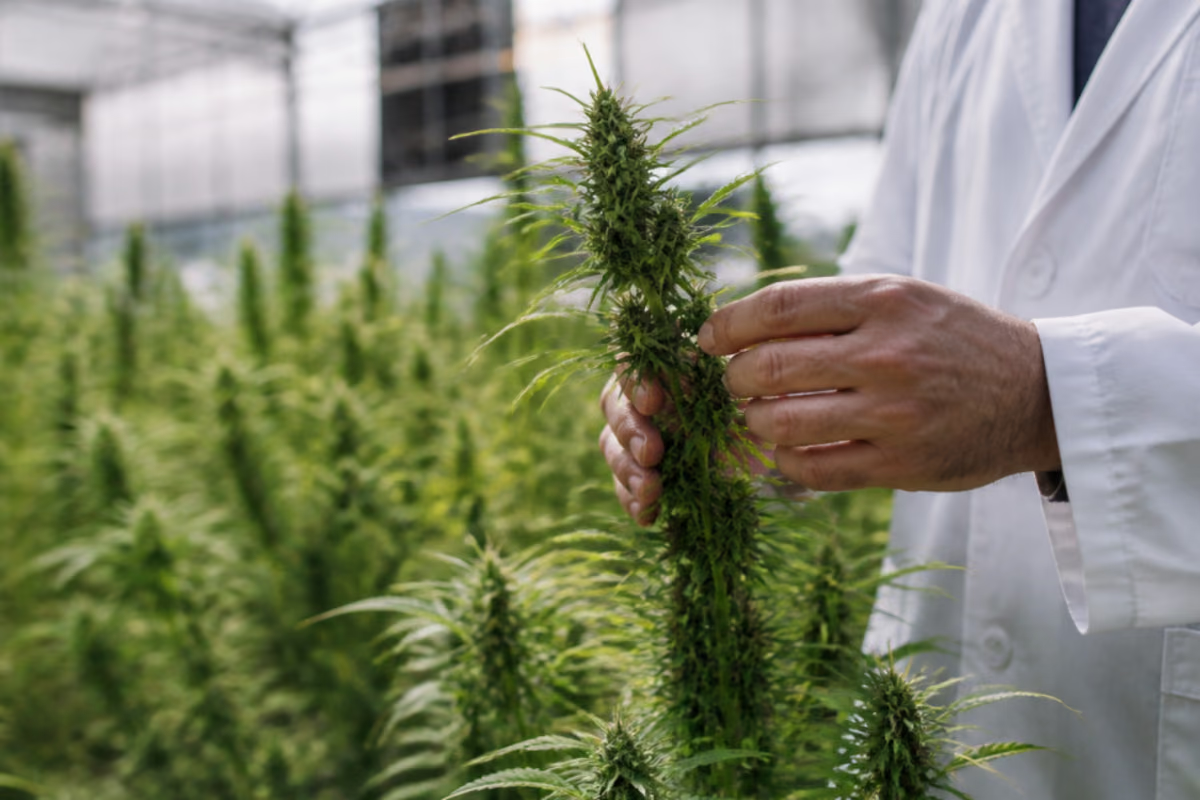
Capital is following. Domestic and international investors are funding pharmaceutical-grade cannabis operations: cultivation facilities built to EU-GMP standards, extraction plants, formulation labs and analytical testing capacity. These are not agricultural investments in the conventional sense. They are pharmaceutical manufacturing investments that happen to start with a plant.
The competitive landscape
The European field is unusually mixed, with established pharmaceutical companies competing directly against cannabis-native enterprises. Key players include Canopy Growth Corporation, Aurora Cannabis Inc., Tilray, Inc., Demecan GmbH, Panaxia Pharmaceutical Industries Ltd, Little Green Pharma, Cannamedical Pharma GmbH, Sapphire Medical, Althea Group and Bedrocan International.
Competitive strategy clusters around three moves: partnerships that pair cultivation expertise with pharmaceutical infrastructure, expanded cultivation capacity to reduce import dependency and improve margins, and formulations that differentiate on bioavailability, dosing precision or delivery format rather than on price alone.
Bedrocan deserves specific mention as the long-standing supplier of standardised cannabis flower under the Dutch programme, arguably the original proof that consistent, pharmaceutical-grade chemovars can be produced at scale, harvest after harvest. That consistency is the whole game in medical cannabis, and it is a genetics and cultivation problem before it is anything else.
What challenges the European medical cannabis market faces
Despite reforms in several jurisdictions, this market is not on rails. Real obstacles remain, and ignoring them produces bad forecasts.
Regulatory fragmentation
There is no unified EU medical cannabis framework. Each member state sets its own qualifying conditions, prescribing rules, THC thresholds, import requirements and pharmacy protocols. A product approved in Germany may need an entirely separate pathway in France or Italy. For companies, that means duplicated regulatory costs and country-by-country market entry. For patients, it means access depends heavily on postcode.
Reimbursement gaps
Prescription volume and paid volume are different things. In most European countries, medical cannabis is only partially reimbursed or not reimbursed at all, leaving patients to cover monthly costs that can run into hundreds of euros. Until statutory health insurers broaden coverage, affordability caps real-world adoption, particularly among the older, chronically ill patients who need it most.
Prescriber hesitancy and training gaps
Most European physicians received no cannabinoid pharmacology training. Many remain uncertain about dosing, drug interactions, chemovar selection and documentation requirements. Legalising a therapy does not automatically create clinicians confident enough to prescribe it. Continuing medical education is the bottleneck, and it moves more slowly than legislation.
Evidence base limitations
Randomised controlled trial data for whole-plant cannabis remains thinner than for isolated cannabinoids. Conservative clinical bodies continue to cite insufficient high-quality evidence for several common indications. Closing that gap requires expensive, long-running trials, and trial design for a multi-compound botanical product is genuinely difficult.
Supply, quality and cost pressure
EU-GMP certification is expensive and slow. Facilities must meet pharmaceutical manufacturing standards, maintain full batch traceability and pass regular inspection. Meanwhile, the arrival of value-tier brands signals intensifying price competition. Producers are squeezed between rising compliance costs and falling per-gram prices, a margin problem that will drive consolidation.
Residual stigma and political reversal risk
Public and political attitudes have shifted, but not uniformly. Changes of government can slow or reverse reform, and adult-use debates sometimes create political headwinds that spill over onto medical programmes. Companies planning multi-year capital investments have to price in that uncertainty.
Outlook to 2034
The trajectory from USD 3,060.0 million in 2025 to USD 13,161.29 million by 2034 assumes several trends hold. We think most of them will.
Telemedicine will keep widening the funnel, particularly in countries where specialist appointments are scarce. Reimbursement coverage will broaden as health economics data accumulates and payers recognise that cannabinoid therapy can reduce opioid use and hospital admissions. Domestic cultivation will continue displacing imports, improving supply stability and compressing costs, and product portfolios will diversify well beyond flower and oil into certified devices, films, patches and nanoemulsions. Clinical endorsement will deepen as trial results land and prescriber training catches up.
The market that emerges will be more competitive and more patient-centric than today's, and it will compete on standardisation, quality assurance and dosing precision rather than novelty.
Underneath all of it sits the same foundation we work with every day: genetics. Consistent cannabinoid and terpene profiles, batch after batch, do not happen by accident. They come from stable, well-selected cultivars grown under controlled conditions by people who understand the plant. The pharmaceutical industry is discovering what growers have always known: the cultivar determines the product, and everything downstream is processing.
A note on our position: Shottas®Seeds produces and sells cannabis seeds for cultivation in jurisdictions where it is legal, and for collection and preservation purposes elsewhere. We do not sell medical cannabis products or offer medical advice. We follow this market because genetics matter, and because the clinical validation of cannabinoids vindicates what growers have argued for generations.
Frequently asked questions
How large is the Europe medical cannabis market and how fast is it growing?
The market was valued at USD 3,060.0 million in 2025 and is projected to reach USD 13,161.29 million by 2034, a compound annual growth rate of 17.60% across the 2026–2034 forecast period. That is more than fourfold growth in under a decade, driven principally by regulatory liberalisation and expanding patient populations rather than by price inflation.
Which European country leads the medical cannabis market?
Germany, decisively. Its April 2024 Cannabis Act reclassified cannabis out of the narcotics schedule, replaced narcotic prescription forms with standard prescriptions and legalised telemedicine consultations. The patient base grew from roughly 250,000 to nearly 900,000 within a year, and BfArM raised the national import quota to 192.5 tonnes in October 2025 to keep pace with demand.
Why do indica strains dominate the European medical market?
Indica-dominant cultivars hold 44% of the species segment because their sedative and analgesic properties match Europe's most common prescribing indications: chronic pain, insomnia, anxiety and muscle spasticity. They also suit commercial cultivation, with shorter flowering cycles, compact structure and reliable yields that help licensed producers meet contracted supply volumes.
Why is CBD the leading derivative rather than THC?
CBD holds 51% of the derivative segment because it is non-psychoactive, carries a favourable safety profile and has therefore cleared regulatory hurdles more easily across multiple jurisdictions. Its therapeutic range covers anxiety, inflammation, chronic pain and seizure disorders, and it formulates readily into oils, capsules and topicals. Epidiolex's approximately USD 972 million in 2024 global sales confirms the commercial case.
Why is cancer the largest application segment?
Cancer accounts for 43% of market revenue because cannabinoids are widely prescribed as supportive care rather than as a cure, managing chemotherapy-induced nausea and vomiting, cancer pain, appetite loss and sleep disruption. Improving survival rates across Europe mean more patients living longer with treatment side effects, which expands rather than reduces demand for symptom management.
What is the significance of the Curaleaf and Jupiter Research inhalation device?
Securing EU Class IIa medical device certification in May 2025 placed a cannabis inhalation device inside the same regulatory category as conventional medical inhalers. By delivering standardised doses through magnetic snap-in cartridges, it solves the dose-variability problem that has limited clinical acceptance of inhaled cannabis, giving prescribers measurable units and patients faster onset than oral formats allow.
Why do oral solutions and capsules lead by route of administration?
Oral formats hold 37% of the market because they mirror conventional pharmaceutical products, which improves patient adherence and prescriber confidence. They deliver controlled, sustained cannabinoid release suited to chronic conditions, and several European regulatory frameworks explicitly favour standardised preparations dispensed through healthcare facilities over raw plant material.
What are the biggest obstacles to further growth?
Regulatory fragmentation across member states, limited or absent reimbursement in most countries, prescriber training gaps, a still-developing randomised trial evidence base for whole-plant products, and rising compliance costs against falling per-gram prices. Political reversal risk and residual stigma also remain relevant for companies making long-horizon capital commitments.
Who are the main companies operating in this market?
The field mixes pharmaceutical incumbents with cannabis specialists. Key players include Canopy Growth Corporation, Aurora Cannabis Inc., Tilray, Inc., Demecan GmbH, Panaxia Pharmaceutical Industries Ltd, Little Green Pharma, Cannamedical Pharma GmbH, Sapphire Medical, Althea Group and Bedrocan International. Competition centres on partnerships, cultivation capacity expansion and novel formulations.
Does the medical market affect home growers and seed buyers?
Indirectly but meaningfully. Medical legalisation normalises cannabis, funds cannabinoid and terpene research, and raises the standard for cultivar consistency and analytical testing across the whole sector. The chemovar knowledge generated by pharmaceutical programmes filters back into breeding and cultivation practice, though medical products and cultivation seeds remain entirely separate regulatory categories.




 Europe