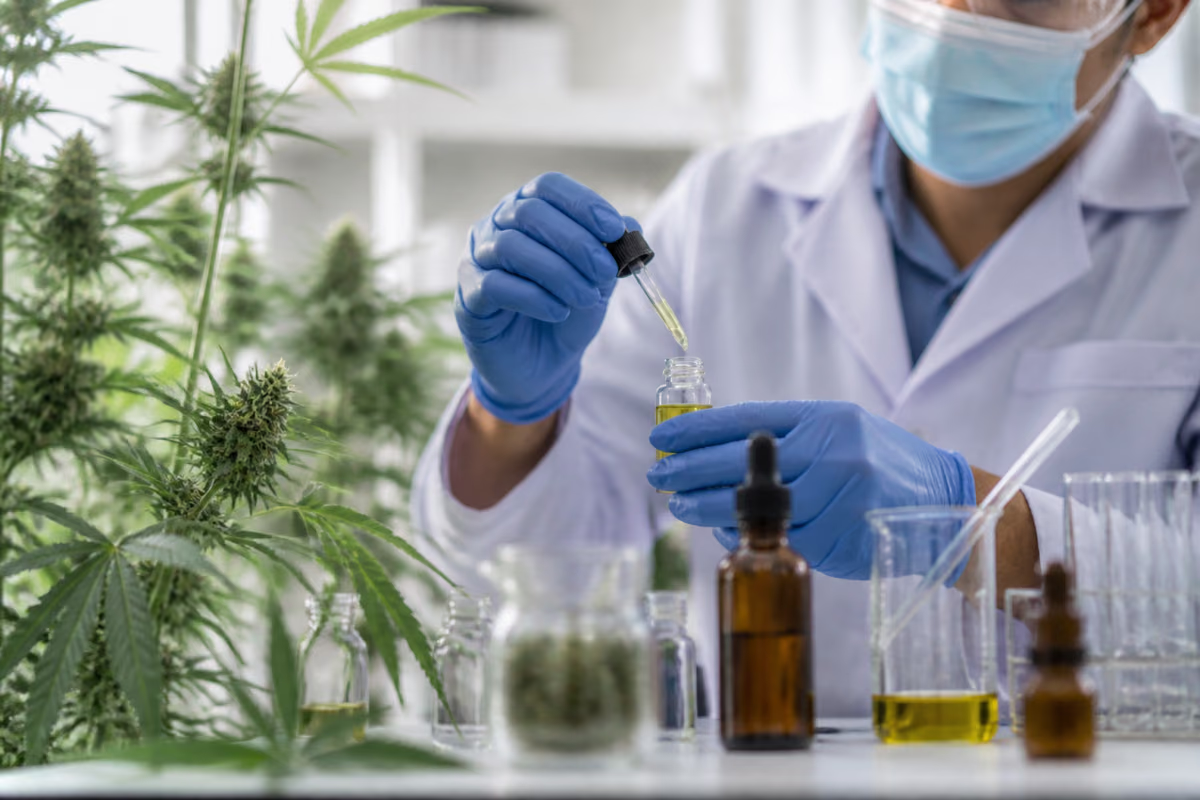
Yes, the UK is underestimating the pharmaceutical potential of cannabis, or at the very least underusing it. That is the view of James Duckenfield, CEO of Glass Pharms®, a UK medical cannabis cultivator. He argues that today's prescribing options reflect what the supply chain can currently produce and what research has so far proven. They do not reflect the limits of the plant itself. The shortfall is not a failure of science. It comes from a long legal interruption, a gap in clinical education, and the difficulty of dosing a natural product with pharmaceutical precision. As growers who spend every day with this plant, we think his argument deserves a close look. It shows how much ground medical cannabis still has to cover, and where the next breakthroughs are likely to come from.
A 45-Year Gap in UK Cannabis Medicine
Cannabis is not new to British medicine. Cannabis tinctures, which are alcohol-based plant extracts, could be legally prescribed in the UK until 1973. Cannabis-based medicines did not return to legal prescribing until November 2018, 45 years later.
That interruption did lasting damage. A generation of doctors trained, qualified and practised without ever prescribing cannabis. Regulation, meanwhile, has struggled to keep pace with the law it is supposed to implement.
The science kept moving the whole time. The first specific cannabinoid receptor binding site was characterised in 1988, and the CB1 receptor was cloned in 1990. CB1 is the main receptor through which THC produces its effects in the brain. Over the following decade, researchers mapped the wider endocannabinoid system, the body's own signalling network that uses cannabinoid-like molecules to help regulate processes such as mood, appetite, pain and immune response. Key discoveries included:
- Anandamide, the first identified endocannabinoid, a cannabinoid molecule the body makes itself
- CB2, a second cannabinoid receptor found largely in immune tissue
- 2-AG (2-arachidonoylglycerol), the most abundant endocannabinoid in the body
By the 2000s, major pharmaceutical companies were actively developing drugs that target cannabinoid signalling. Yet nearly forty years after that first receptor discovery, only one UK university includes the endocannabinoid system in its medical syllabus. Prescribers cannot be confident about a system they were never taught.
More Than Two Molecules: The Untapped Chemistry of Cannabis
UK patients now have a wide choice of cannabis-based products for medicinal use, including dried flower, oils, edibles, capsules and vape cartridges. Back in November 2018 that range would have been close to impossible to imagine. Variety is not the same as completeness, though.
Almost every option prescribed today rests on two molecules. A cannabinoid is a compound that interacts with the endocannabinoid system, and THC and CBD are the two "major" cannabinoids the plant produces. Both are comparatively well understood. THC (tetrahydrocannabinol) is the main intoxicating compound. CBD (cannabidiol) is non-intoxicating.
Cannabis flower is not a two-molecule medicine. It is a complex botanical material containing:
- More than 100 cannabinoids, most of which appear only in small amounts
- Terpenes, the aromatic compounds behind each cultivar's scent and flavour, from zesty limonene to peppery caryophyllene
- Flavonoids, plant pigments with their own biological activity, some found only in cannabis
Many of these compounds have been known to science for decades. Their individual and combined pharmaceutical potential is still far less developed. Any grower knows that two cultivars with identical THC numbers can smell, taste and feel completely different. That difference is chemistry, and medicine has barely begun to explore it.
CBG and THCV: Why Minor Cannabinoids Are Hard to Supply
Two minor cannabinoids stand out for current research interest. Cannabigerol (CBG) is often called the "mother cannabinoid" because the plant converts its acid form into other cannabinoids, including THC and CBD, as it matures. Tetrahydrocannabivarin (THCV) is a close structural relative of THC with a shorter molecular side chain, and its pharmacological profile is distinct from THC's.
Neither is exotic. Both have been known to science for decades. They have not been widely prescribed since 2018 for a practical reason. Breeding a plant that expresses a minor cannabinoid reliably, batch after batch, takes serious time and effort. Most cannabis naturally puts its energy into THC or CBD, so a CBG- or THCV-dominant chemotype has to be selected, stabilised and then grown under tightly controlled conditions.
Glass Pharms has taken on that supply problem at its facility in Wiltshire. According to Duckenfield:
- Its CBG-rich cultivar has been available to eligible UK patients for more than two years
- A THCV-rich medical cannabis flower is on the verge of release
His point is that the UK formulary is shaped by what growers have been able to deliver consistently and by what research has so far been able to prove. It does not describe the full potential of the plant. Better supply makes more research possible, and that research then justifies more supply.
Why Dosing Precision Builds Clinical Confidence
Duckenfield argues that patient and prescriber confidence grow with two factors: education and control.
Clinicians need to trust that a treatment delivers the correct dose so they can titrate it. Titration means adjusting a dose step by step until it reaches the most effective level with the fewest side effects. It is standard practice across medicine, and it only works when each dose is predictable.
Patients need the same assurance, and they overwhelmingly look to their prescribing specialist for it. Someone managing a long-term condition needs to know that what worked last month will work the same way this month. When they feel different, they should be able to trust that the change reflects their condition and not their medicine.
This is where cannabis flower is an outlier. Most prescribing happens in milligrams or micrograms, through delivery mechanisms with well-understood pharmacology. A tablet contains a fixed amount of active ingredient, and its absorption has been studied in detail. Flower is a natural material with variable potency. It is weighed out by the patient and delivered through devices and techniques that differ from person to person. None of that makes flower ineffective, and many patients rely on it. It does make flower harder to fit into the frameworks clinicians and regulators already use, and that gap slows wider acceptance of cannabis medicine.
The Maths Behind Flower Dosing Variation
To see why flower is hard to dose precisely, start with the label claim, which is the cannabinoid percentage stated on the product. In the UK, flower may currently test within 10% of that claim. A cultivar labelled at 25% THC may legitimately contain anywhere from 22.5% to 27.5%.
The patient then weighs each dose at home. A 0.2g dose weighed to the same 10% tolerance could be anything from 0.18g to 0.22g. The two variables stack:
| Variable | Low end | Intended | High end |
|---|---|---|---|
| THC content (±10% of label) | 22.5% | 25% | 27.5% |
| Weighed dose (±10%) | 0.18g | 0.20g | 0.22g |
| Resulting THC dose | 40.5mg | 50mg | 60.5mg |
A patient expecting 50mg of THC could take 60.5mg at the top of both ranges or 40.5mg at the bottom. That is a swing of roughly 20% either side of the intended dose, and it comes before accounting for the patient's physiology, the device or the inhalation technique.
In most areas of medicine, a 20% variance in active ingredient would be a serious problem. For cannabis flower it is currently built into the system.
Clones, Sensors and Robotics: Narrowing Natural Variation
Some variation is simply the nature of the material. No two plants are ever truly identical. Much of Glass Pharms' investment goes into narrowing that spread.
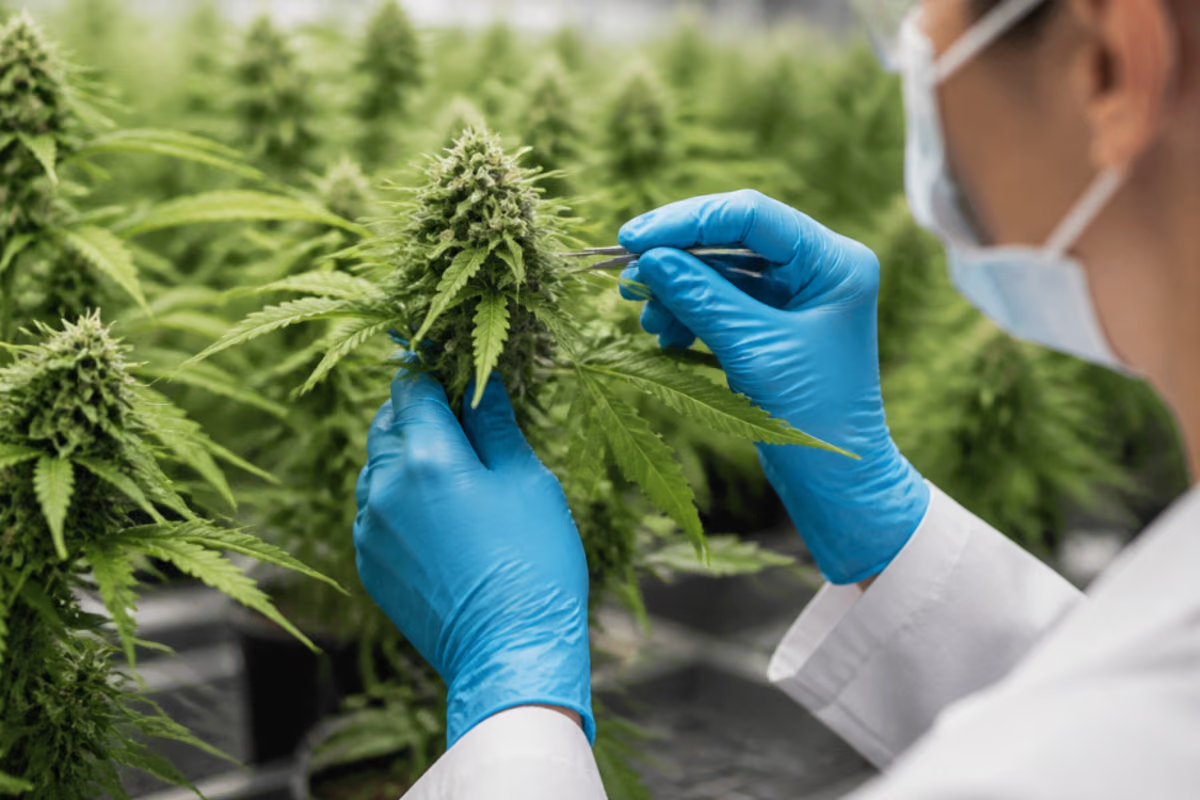
The first lever is genetics. The company grows from tissue-culture clones, genetically identical plants propagated in sterile lab conditions from a small piece of a mother plant. Seed-grown crops carry some genetic drift. Clones start every plant in a batch from the same genetic blueprint.
This is where our world as a seed bank and the pharmaceutical world diverge. Duckenfield notes that early discovery work with reputable seed sources produced up to six distinct phenotypes from a single, supposedly uniform packet. A phenotype is the physical expression of a plant's genetics, covering its structure, aroma and cannabinoid profile. For home growers and breeders, that diversity is part of the fun. It is how keeper plants get found and new strains are born. For a medicine that must be identical every batch, the same diversity is a problem to eliminate.
The second lever is environment. Glass Pharms controls more than ten growing factors, including light, temperature, humidity and nutrients, using AI and remote sensors. A robotic platform moves batches through the facility so each growth stage gets exactly the conditions it needs.
That gets you a long way. It does not get you to a tablet.
Oils, Vaporisers and the Next Delivery Formats
If flower cannot reach tablet-level precision on its own, delivery format has to close the gap. Each format offers a different level of control:
- Loose flower: the patient weighs every dose, and variable potency stacks with weighing error
- Oils: an oral syringe measures a defined volume accurately, which improves dosing control considerably
- Metered vaporiser systems: pre-filled dosing capsules standardise how much flower goes into each session
Oils still depend on technique. Bioavailability is the share of a dose that actually reaches the bloodstream. Cannabinoids absorbed sublingually, meaning through the blood vessels under the tongue, have significantly better bioavailability than those that are swallowed and processed by the gut and liver. An oil held under the tongue and an oil swallowed too early are not the same dose.
On the inhalation side, Duckenfield highlights Storz & Bickel's dosing capsules and the Class IIa medical device certification behind its vaporisers. Class IIa is a regulatory category for medium-risk medical devices that requires independent assessment of safety and performance. He calls these important steps towards precise flower dosing. Glass Pharms is also developing pharmaceutical forms of cannabis-based medicine, both inhaled and oral, built around dosage control and ease of use.
Where UK Cannabinoid Medicine Goes Next
Better delivery matters more than it first appears. Regulators in Germany and France have both shown discomfort with loose flower as a pharmaceutical product. Patients, meanwhile, keep choosing flower because it works for them.
Duckenfield argues that those two positions have to be brought together, and better delivery is how that happens. The aim is not to take away a format patients rely on. It is to give regulators the control they are asking for. Precise dosing makes clinical trials cleaner, titration easier and prescribing decisions more defensible.
There is already solid ground to build on. Licensed medicines using cannabinoids are in safe clinical use today. Seen in that light, cannabis medicine is near the beginning of an important journey, not the end of one.
His conclusion is that today's market is not the limit of what the plant can do. It is the foundation. Educators need to bring the endocannabinoid system into medical training, and regulators need frameworks that reward precision and research into minor cannabinoids. With both in place, the plant's pharmaceutical potential finally has room to grow.
We couldn't agree more. Average is our enemy, in the grow room and in the clinic.
Frequently asked questions
When did medical cannabis become legal in the UK?
Cannabis-based products for medicinal use became legally prescribable in the UK in November 2018. Before that, cannabis tinctures could be prescribed until 1973, which left a 45-year gap. During that time most clinicians trained without any experience of cannabis medicine, and that gap in education still affects prescribing confidence today.
What are minor cannabinoids?
Minor cannabinoids are the compounds cannabis produces in smaller amounts than THC and CBD. Examples include CBG (cannabigerol) and THCV (tetrahydrocannabivarin). Both have been known to science for decades and attract growing research interest. Breeding plants that express them reliably, batch after batch, has limited their availability in medical settings.
How much can THC doses vary with medical cannabis flower?
UK flower may test within 10% of its labelled THC content, and home weighing adds a similar margin of error. Combined, a patient aiming for 50mg of THC could actually take anywhere from about 40.5mg to 60.5mg. That is roughly a 20% swing either side of the intended dose.
Why do medical cannabis producers use clones instead of seeds?
Seeds carry natural genetic variation, so one packet can produce several distinct phenotypes with different cannabinoid profiles. Tissue-culture clones are genetically identical copies of a single mother plant. They give medical producers the batch-to-batch uniformity pharmaceutical products require, while seeds remain ideal for home growers, breeders and phenotype hunters.
Does it matter whether cannabis oil is swallowed or held under the tongue?
Yes. Cannabinoids absorbed through the blood vessels under the tongue reach the bloodstream more efficiently than those that are swallowed and processed by the digestive system and liver. The same measured volume of oil can therefore act as a noticeably different dose depending on how it is taken.
What is the endocannabinoid system?
The endocannabinoid system is a signalling network in the human body. It uses cannabinoid-like molecules such as anandamide and 2-AG, along with receptors including CB1 and CB2, to help regulate processes like mood, appetite, pain and immune function. Despite decades of research, it is rarely taught in UK medical schools.



 Europe