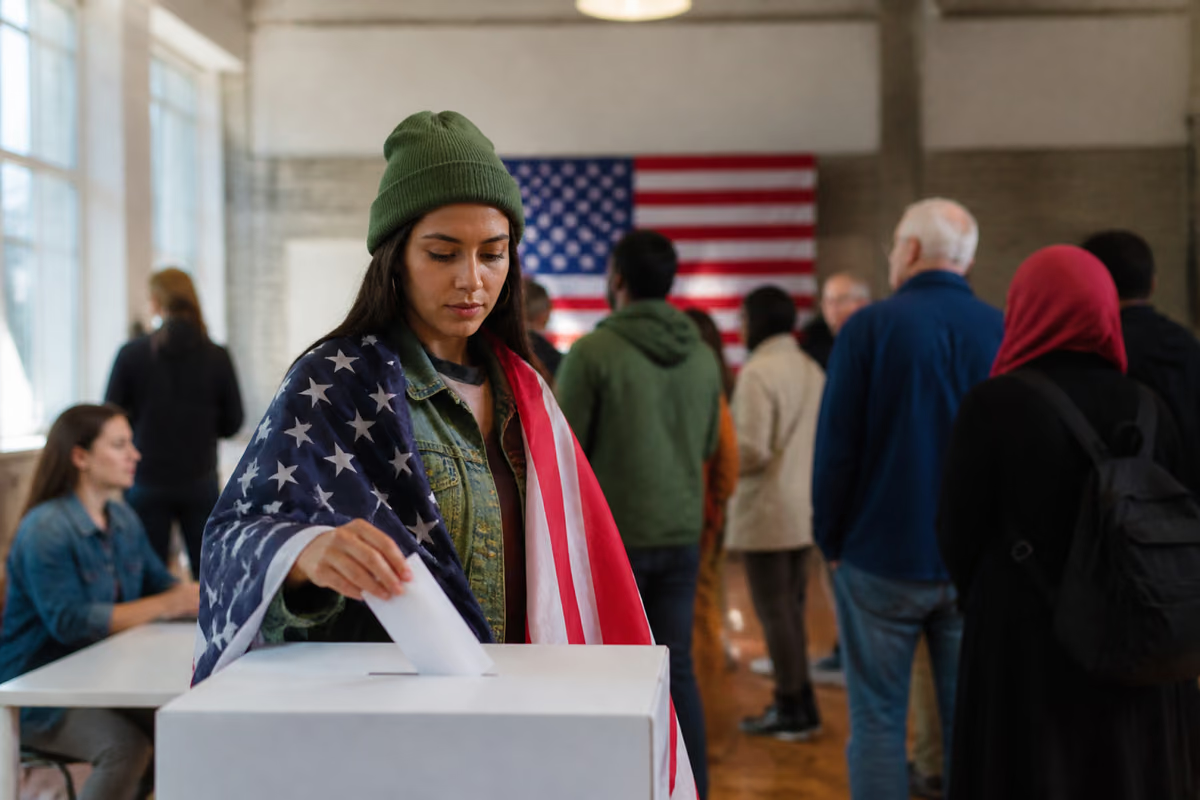
Cannabis common sense won the U.S. midterm election. Voters in Massachusetts defeated Question 8, which would have dismantled the state's legal adult-use market. Voters in Idaho rejected HJR 4, which would have stopped citizens from deciding cannabis policy at the ballot box. Opponents of cannabis placed both measures on the ballot, and both failed. That matters well beyond two states. The results show that public support for legalization holds firm years after it takes effect. They also show that prohibitionist strategies, however well funded, are struggling to find voters. For growers, collectors and enthusiasts everywhere, this is a result worth paying attention to.
Two Ballot Measures, One Clear Message
A ballot measure is a proposed law or constitutional change that voters approve or reject directly, rather than leaving the decision to elected lawmakers. This midterm, cannabis appeared on the ballot in two very different states.
Massachusetts has had legal adult-use cannabis for a decade. Adult-use means cannabis is legally sold to and consumed by adults, typically those 21 and older, without a medical recommendation. Idaho sits at the opposite end of the spectrum: cannabis is illegal there in all forms.
Both measures came from cannabis opponents. Each one tried to move policy backwards, by a different route.
| Measure | State | Current cannabis status | What it sought | Result |
|---|---|---|---|---|
| Question 8 | Massachusetts | Legal for adults since a 2016 vote | Repeal key elements of the adult-use legalization law | Rejected |
| HJR 4 | Idaho | Illegal in all forms | Amend the state constitution to keep cannabis policy out of the public's hands | Rejected |
The common thread is clear. When voters are asked whether they want less cannabis freedom, they say no.
Massachusetts Question 8: A Trial Balloon That Popped
Ten years after Massachusetts voters legalized cannabis for adults, opponents asked them to reverse course. Question 8 sought to repeal key elements of the adult-use law. In practice, that would have ended the state's regulated market, the licensed system of growers, testing labs and retailers that operates under state oversight.
The measure was widely seen as a trial balloon, meaning a test run used to gauge public reaction before launching a wider campaign. Had it passed, similar repeal efforts would likely have followed in other legal states. It failed.
The Marijuana Policy Project (MPP), a national advocacy group working to reform cannabis laws, said Massachusetts residents had "voted to stay the course." NORML, the National Organization for the Reform of Marijuana Laws, read the result as proof that support is still growing:
"There's no 'buyer's remorse' among voters when it comes to legalizing and regulating marijuana. In fact, more Massachusetts voters support legalization today than did a decade ago, and these election results prove it." — Paul Armentano, NORML Deputy Director
Armentano added that backers spent millions trying to "reset the conversation," and that the campaign "was never about promoting the health and safety of Massachusetts residents." He said the defeat would likely make prohibitionist groups and their funders reconsider plans to roll back legal markets nationwide. Money bought a campaign. It didn't buy the vote.
Why Regulated Cannabis Markets Keep Winning Voters
Massachusetts voters didn't defend legal cannabis out of habit. They defended it because a decade of real-world experience has shown measurable results. Question 8's defeat came despite what MPP Executive Director Adam J. Smith called "a well-funded scare campaign." The vote kept intact a legal adult-use market that opponents wanted to end.
Smith listed the benefits he believes voters recognized in a regulated system:
- Reduced youth access: licensed retailers check IDs, which Smith links to significantly fewer kids using cannabis.
- Safer products for adults: items are rigorously tested and properly labeled, so buyers know what they're getting.
- Plummeting arrest rates: fewer lives needlessly disrupted and fewer tax dollars spent on enforcement.
- Economic growth: tens of thousands of new jobs and hundreds of millions in new revenue.
- Personal liberty: recognition of individual freedom and "freedom of consciousness."
We see the same logic every day as a seed bank built by growers for growers. Transparency and quality aren't slogans. They are what makes a legal market better than an illicit one. When product is tested, labeled and traceable, consumers win, and voters notice.
Idaho HJR 4: A Vote About Who Gets to Decide
Idaho's measure drew less media attention, but it may be the more consequential of the two. HJR 4 was a House Joint Resolution, a proposal passed by the legislature that, in this case, sent a constitutional amendment to voters for approval. Its goal was to amend the Idaho constitution so the public could not determine the state's cannabis policies.
That is a striking move in a state where cannabis is already illegal in every form. Anti-cannabis lawmakers still found a way to try to make it even more illegal, by locking voters out of the decision for good.
The timing tells the story. Medical cannabis has overwhelming support among Idaho voters, and this year advocates came close to putting a medical cannabis initiative on the ballot. HJR 4 was the legislature's answer, an attempt to make sure no such initiative could ever reach voters.
"HJR 4 wasn't anti-marijuana; it was anti-democracy." — Paul Armentano, NORML
Armentano argued that Idaho lawmakers "can no longer make a rational case" for prohibition, so they tried to remove the question from voters altogether. Idahoans refused to give up what he called "one of the most fundamental powers they have in a free society: their power to vote."
Idaho's Cannabis Laws Rank Among the Harshest in the U.S.
Idaho's rejection of HJR 4 stands out more given how strict its cannabis laws already are. Cannabis is illegal there in all forms, and MPP describes the state's laws as "among the most draconian in the nation."
Here is how Idaho's penalties compare with Massachusetts, where adults voted to keep legal cannabis:
- Idaho, simple possession: up to one year in jail.
- Idaho, second offense: can be elevated to a felony, a serious criminal charge that can carry long-term consequences for employment, housing and civil rights.
- Idaho, arrest rates: among the highest cannabis arrest rates in the U.S.
- Massachusetts: adults may legally buy tested, labeled cannabis from licensed retailers.
Despite these penalties, or perhaps because of them, Idahoans strongly back medical cannabis. MPP's Adam J. Smith called the HJR 4 result "a major victory for citizen-led advocacy." He expressed hope it will lead to "an even stronger effort in the coming cycle" to let voters override the legislature's resistance. With the ballot box still open to them, Idaho reformers now have a real path forward.
What the Midterm Results Mean for Cannabis Reform
Together, the Massachusetts and Idaho votes send a message prohibitionists will struggle to ignore. In a state with ten years of legal cannabis, voters chose to keep it. In a state with total prohibition, voters refused to give up their right to change it. Average is our enemy, and so is going backwards.
Three takeaways stand out:
- Legalization sticks. NORML says support in Massachusetts is higher now than in 2016, which undercuts the idea that voters regret legalizing.
- Repeal campaigns may stall. Question 8 was a test case for rolling back legal markets nationwide. Its defeat makes copycat efforts in other states less attractive to funders.
- Direct democracy protects reform. Idaho's vote preserves the ballot initiative, a process that lets citizens put proposed laws to a public vote. Historically, that process has driven much of cannabis reform in the U.S.
For us, and for the growers and collectors who make up our community, this is good news. Public opinion keeps moving in one direction. We'll keep tracking it, reporting on it and backing the transparency that makes legal cannabis work. Stay informed, stay legal, and keep growing.
Frequently asked questions
What was Massachusetts Question 8?
Question 8 was a ballot measure in the U.S. midterm election that sought to repeal key elements of Massachusetts' adult-use cannabis law. Passing it would have ended the state's regulated market for adults. Cannabis opponents placed it on the ballot ten years after legalization, and voters rejected it.
What did Idaho's HJR 4 propose?
HJR 4 was a legislative resolution asking Idaho voters to amend the state constitution so the public could not determine cannabis policy through ballot initiatives. Critics, including NORML, called it anti-democratic because it targeted voters' power rather than cannabis itself. Idaho voters soundly rejected the proposal in the midterm election.
Why was the Massachusetts vote called a test run?
Observers saw Question 8 as a trial balloon for prohibitionist groups hoping to roll back legal cannabis across the U.S. A win in Massachusetts would likely have prompted similar repeal measures in other legal states. Its defeat suggests those groups and their funders may now reconsider their nationwide plans.
Is cannabis legal in Idaho?
No. Cannabis is illegal in Idaho in all forms, including for medical use. Simple possession can bring up to a year in jail, and a second offense can become a felony. Idaho also has one of the highest cannabis arrest rates in the country, despite strong voter support for medical cannabis.
Do Massachusetts voters still support legal cannabis?
Yes. According to NORML Deputy Director Paul Armentano, more Massachusetts voters support legalization today than when the state legalized adult-use cannabis a decade ago. The defeat of Question 8, despite a well-funded repeal campaign, shows that residents want to keep their regulated, tested and labeled cannabis market.
What happens next for medical cannabis in Idaho?
Because HJR 4 failed, Idaho citizens keep the right to put cannabis measures on the ballot. Advocates came close to qualifying a medical cannabis initiative this year. The Marijuana Policy Project hopes the result will power an even stronger campaign in the next election cycle to let voters decide directly.





 Europe